

Key Areas
The Department of Basic Sciences is dedicated to providing a strong foundational understanding in core scientific disciplines essential for engineering education. Key areas include:
Mathematics: Covering topics such as calculus, linear algebra, differential equations, and probability theory to equip students with analytical and problem-solving skills.
Physics: Focusing on mechanics, electromagnetism, thermodynamics, and modern physics to help students comprehend the physical principles underlying engineering systems.
Chemistry: Emphasizing general, organic, and inorganic chemistry to provide insights into material properties and chemical processes relevant to engineering.
Humanities and Social Sciences: Offering courses in communication skills, ethics, and management to develop well-rounded professionals with strong interpersonal and leadership abilities.
Research Methods
The department employs various research methods to enhance the understanding and application of basic sciences in engineering:
Theoretical Analysis: Developing mathematical models to describe and predict physical and chemical phenomena.
Experimental Techniques: Conducting laboratory experiments to validate theoretical concepts and explore new scientific frontiers.
Computational Simulations: Utilizing software tools to simulate complex systems and analyze data for research and educational purposes.
Interdisciplinary Collaboration: Working with other departments to apply basic science principles to solve engineering problems.
Unique Aspects
The Department of Basic Sciences at SKIT offers a comprehensive curriculum that balances theoretical knowledge with practical experience. Students have access to well-equipped laboratories and are encouraged to participate in research projects and interdisciplinary collaborations. The department also emphasizes the development of soft skills through courses in communication and ethics, preparing students for successful careers in engineering and related fields.
"Science is the great antidote to the poison of enthusiasm and superstition."
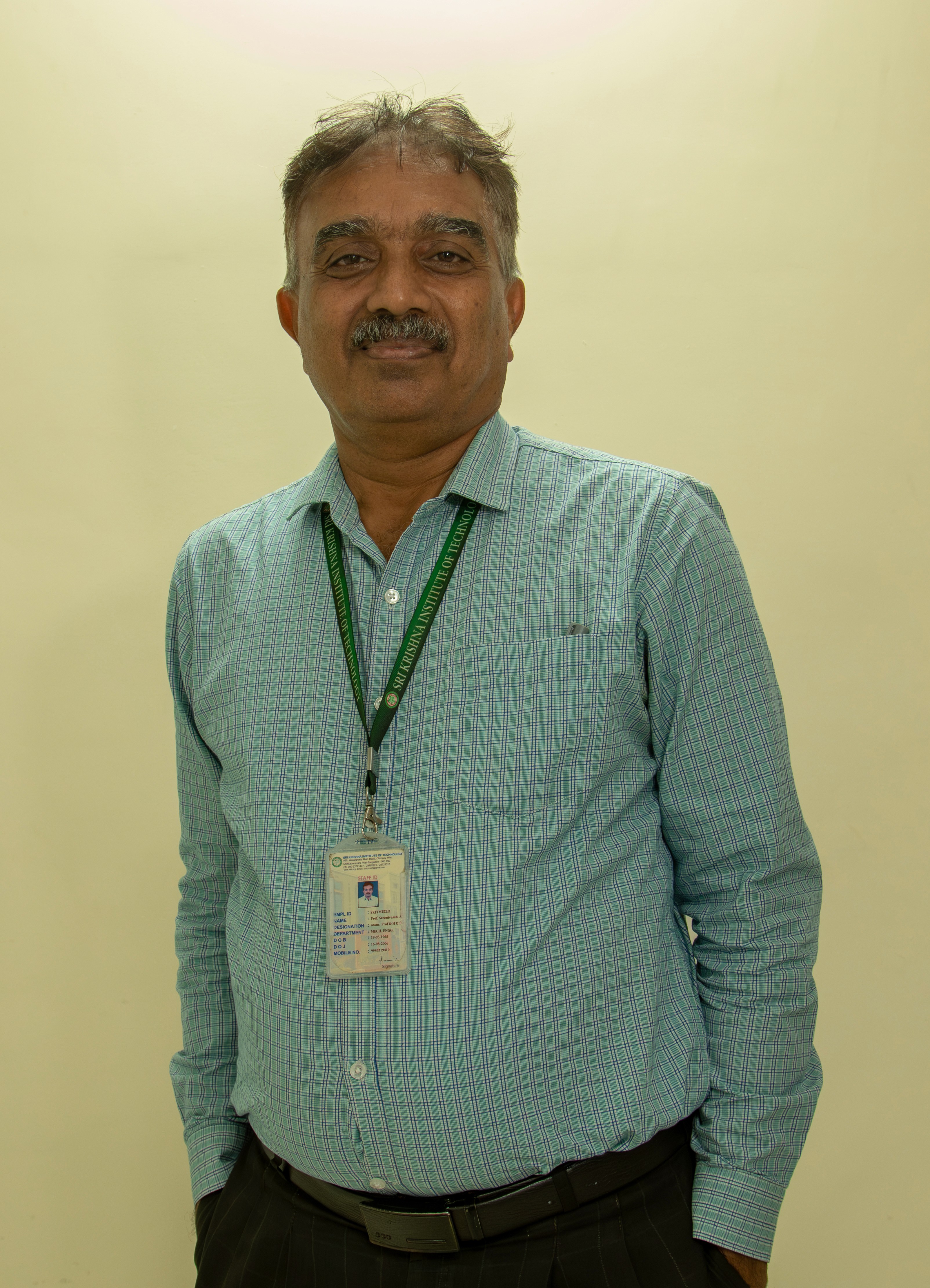
Dr. Shankar
Professor and HOD
next class